

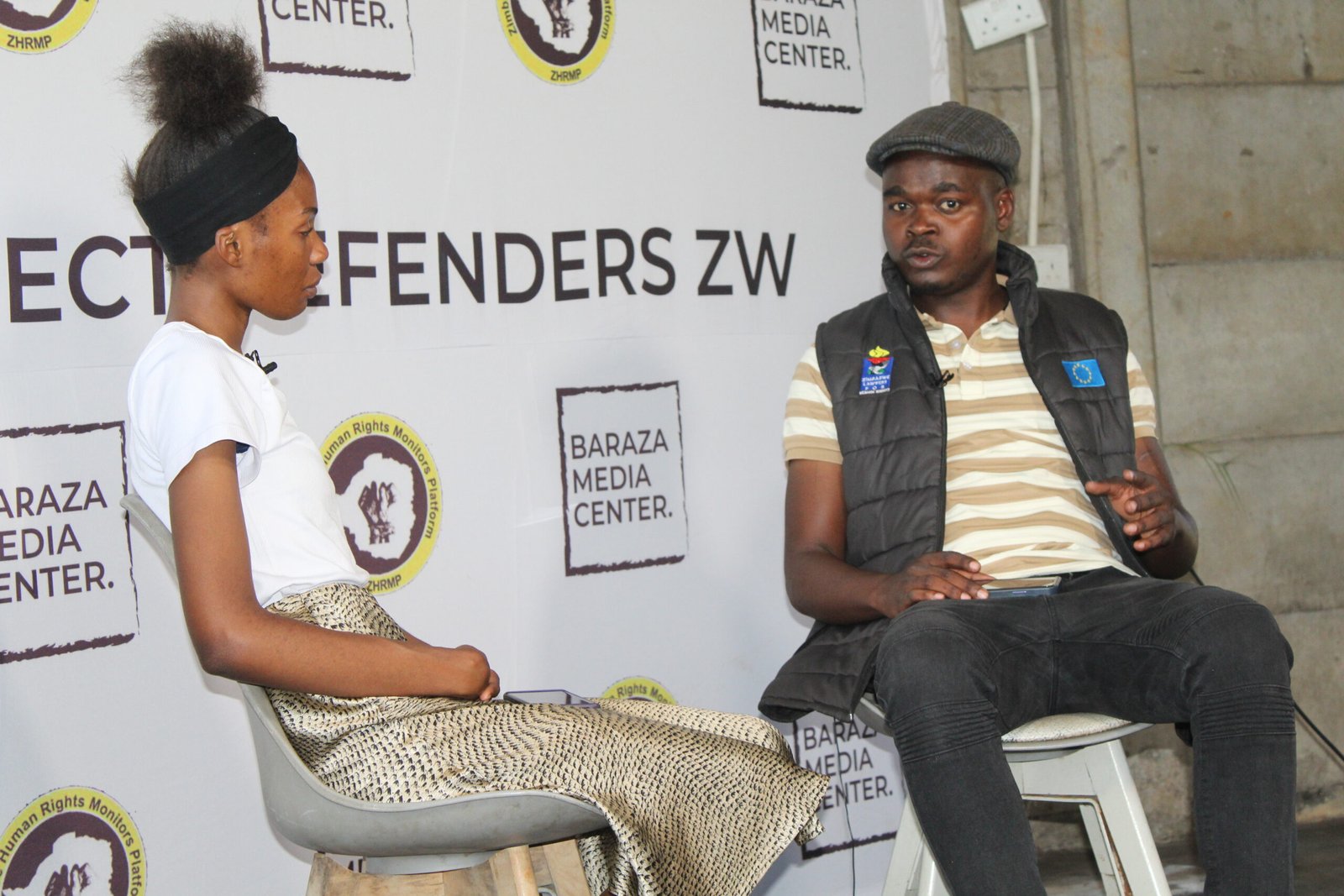
In a recent interview with the Zimbabwe Human Rights Monitors Platform, Emmanuel Sitima, the President of the Zimbabwe National Students Union (ZINASU), articulated the pressing need for a radical transformation of the higher education landscape in Zimbabwe. Sitima presented a compelling argument for free and de-politicized campuses, emphasizing the critical role of education in national development and the myriad challenges faced by students in the current socio-economic and political climate.
Sitima began by defining ZINASU as a collective of academic students from diverse tertiary institutions, united by the pursuit of academic freedom and free education. He elucidated ZINASU’s understanding of free education as the abolition of tuition and accommodation fees, with the financial burden being borne by the government, reminiscent of the immediate post-independence era. Sitima posited that the feasibility of such a system lies in a fundamental re-prioritization of national resources. He argued that the current budgetary allocation, which disproportionately favors the military despite the absence of war, alongside the pervasive issue of corruption and illicit financial flows, deprives essential sectors like education of crucial funding. Sitima asserted that redirecting resources lost through corruption and strategically reallocating budgetary funds could readily facilitate free higher education.
Beyond financial constraints, Sitima highlighted a range of challenges plaguing students, including sexual harassment on campuses, inadequate accommodation, poor sanitation, and deficient infrastructure. These issues, he contended, contribute to the production of under-equipped graduates. ZINASU has been actively advocating for “free campuses,” encompassing not only the financial aspect but also the eradication of political interference. Sitima drew attention to the victimization of students for exercising their rights to association and assembly, underscoring the suppression of dissent within academic institutions.
The issue of sexual harassment was further contextualized within the prevailing economic hardships, with Sitima highlighting the exploitative “blesser to bless” phenomenon, where older individuals prey on financially vulnerable female students in exchange for basic necessities like accommodation. He argued that the economic precarity of students renders them susceptible to such abuses, often at the hands of those in positions of authority within learning institutions.
Sitima was critical of the Ministry of Higher and Tertiary Education, Innovation, Science and Technology Development, characterizing its leadership as “intellectual thugs” lacking sincerity and empathy for students from disadvantaged backgrounds. He emphasized that the constitutional right to affordable and accessible education (Section 75) is being undermined, transforming education into a privilege accessible only to a select few. The exorbitant tuition fees demanded by institutions, far exceeding the national poverty line and average salaries, effectively exclude ordinary citizens from higher learning. Sitima stressed that the Ministry has a constitutional obligation to ensure equitable access to education for all, regardless of their socio-economic standing.
Addressing the recent expulsion and suspension of students who sought to conscientize their peers about their rights, Sitima unequivocally condemned these actions as political persecution and a violation of human rights. ZINASU is actively challenging these decisions in the courts, expressing confidence that the politically aligned university administration’s actions will be overturned.
Sitima underscored the historical significance of student activism in addressing national issues, asserting that students, as future employees and citizens, have a vital role to play in tackling the country’s challenges. He emphasized the interconnectedness of students’ issues with the broader national context, particularly the pervasive corruption that deprives essential sectors, including education, of vital resources. Drawing attention to instances of large-scale corruption, Sitima illustrated how the misappropriated funds could have been used to provide free education. He articulated ZINASU’s firm stance that student concerns cannot be divorced from the national question, deeming any attempt to do so as illegitimate.
Furthermore, Sitima highlighted the systematic silencing and exclusion of young people from key decision-making processes in Zimbabwe. He stressed the crucial role of ZINASU in conscientizing the youth, including those engrossed in popular culture, about their demographic significance and the need to challenge the exploitation of national resources by an older ruling elite. Sitima positioned ZINASU as “torchbearers of society,” echoing the African adage that educating a child equates to educating a society. He urged students to actively engage in their communities, educating their peers about their rights and challenging the status quo.
In his concluding remarks, Sitima offered a message of resilience to fellow advocates for academic freedom and human rights defenders. He emphasized the power of collective action and the inevitability of change, drawing historical parallels to the eventual downfall of even the most formidable dictators. Sitima reiterated his belief in the power of the masses and the ultimate triumph of the people’s voice, urging continued perseverance in the pursuit of a more just and equitable society.
