Student Union Calls for Democratic Revolution to Address Inequality and Systemic Collapse
In the face of political repression, economic collapse, and institutional decay, Zimbabwe’s students are mobilizing as a powerful force for democratic renewal. The Zimbabwe National Students Union (ZINASU) has emerged as a vocal critic of the state’s entrenched failures, calling for a social and political revolution led by young people to reclaim the nation’s future.
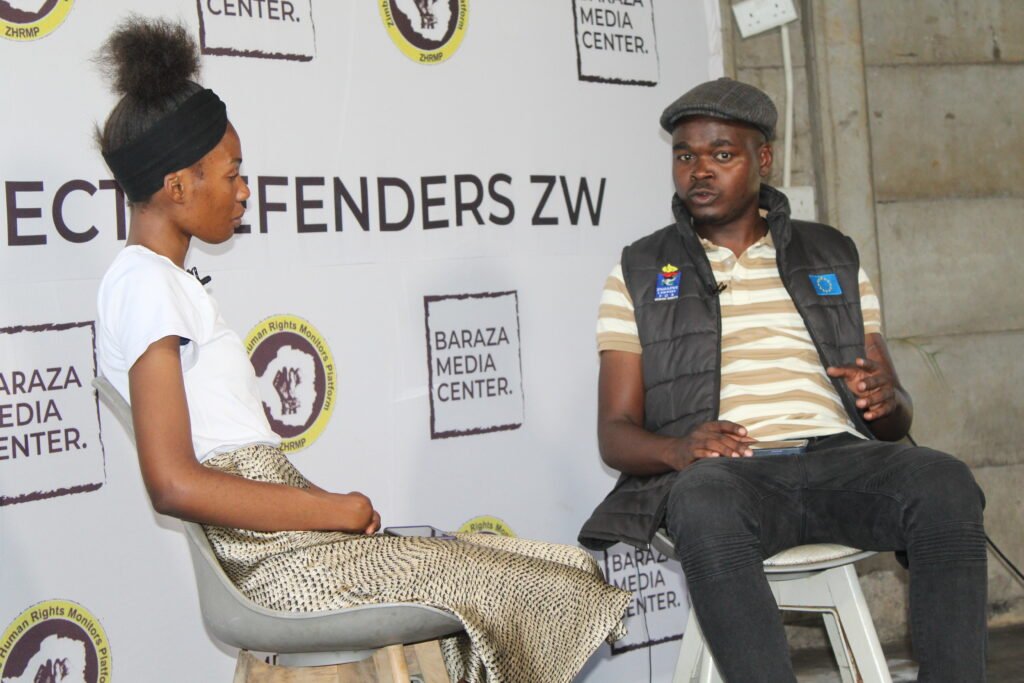
Tapiwanashe Chiriga, Secretary General of ZINASU, spoke candidly in a recent interview about the dire state of Zimbabwe’s democracy and the daily toll it takes on students.
“Zimbabwe’s political situation is volatile, toxic, and catastrophically torn,” said Chiriga. “It determines every facet of student life—from tuition fees to mental health—and until that system is dismantled, the youth will continue to suffer.”
Students, many of whom come from impoverished backgrounds, are increasingly unable to meet the basic costs of education. Soaring tuition, food insecurity, and lack of access to healthcare have driven some to desperation, with mental health crises and suicides on the rise across campuses.
Chiriga attributes these conditions to a broader crisis of leadership. “The fish rots from the head. The looting, impunity, and destruction we see today are products of a political elite who govern not for the people, but at their expense.”
Despite these challenges, ZINASU remains resolute in its belief that students can and must lead change. Echoing the revolutionary spirit of past Zimbabwean youth movements, Chiriga asserts that students are uniquely positioned to drive transformation due to their intellectual capacity, demographic power, and proximity to the country’s lived realities.
“Students are the heartbeat of every revolution,” he said. “We are the generation that has inherited brokenness, and it’s our duty to rebuild—not for ourselves alone, but for the future generations whose dreams depend on our actions today.”
ZINASU’s vision is clear: an inclusive, democratic Zimbabwe where academic freedom is protected, basic services like education and healthcare are free and accessible, and leadership is accountable to its people. This vision stands in stark contrast to the country’s present reality, which remains haunted by the legacy of former president Robert Mugabe.
“Mugabe the man may be gone,” Chiriga said, “but Mugabe the system is alive and thriving. The culture of dictatorship, looting, and impunity he institutionalized is what we are still fighting today.”
ZINASU has a long history of challenging authoritarian rule, from resisting Mugabe’s one-party state ambitions in the 1980s to campaigning against constitutional amendments in the early 2000s. Today, it continues to mobilize students to demand transparency, accountability, and social justice—starting at the level of local student councils and extending all the way to the presidency.
Chiriga’s call to action is a reminder that revolution does not always mean violent upheaval. “It begins where you are,” he said. “Join your union. Speak out. Demand better from your leaders—whether that’s the SRC or the head of state. Change doesn’t come from silence.”
In a country where the space for dissent remains perilous, the role of ZINASU—and the courage of students who speak out—is more critical than ever.